


CASE STUDY: Cyanobacteria Bloom Remediation (Lake Tewa, New Zealand)
Ultrasonic Lake Restoration & Ecosystem Reset at Lake Tewa, Queenstown, New Zealand
Home > Case Studies > Lake Tewa
Overview of Lake Tewa
Lake Tewa is a freshwater Environmental & Recreational lake in Queenstown, New Zealand, operating within a nutrient-influenced catchment and governed by the Jack’s Point Residents & Owners Association (JPROA).
In late March 2025, the lake entered severe harmful cyanobacteria bloom conditions during peak summer season. On 17 April 2025, Hydro Synergy deployed the DB Quattro G3 Critical Structural Resonance (CSR) Ultrasonic System as a non-chemical intervention designed to interrupt bloom recurrence without sediment disturbance or chemical dosing.
This case study documents monitored ecological transition from March 2025 through January 2026, including confirmed summer 2026 bloom-season stability under laboratory verification
Summary At A Glance:
The Challenge:
In March 2025, Lake Tewa recorded acute cyanobacteria dominance typical of active harmful algal bloom (HAB) conditions in New Zealand lakes during peak summer.
Cell counts reached 25,027,870 cells/mL. Surface pH elevated to 9.3 due to intense bloom photosynthesis. Turbidity measured 120 NTU at four metres depth, indicating severe light attenuation and ecological stress.
At bloom peak, Total Nitrogen measured 1.61 mg/L, confirming hypertrophic nutrient conditions capable of fuelling sustained recurrence.
Historically, Lake Tewa experienced boom-and-bust cycling, including a June 2023 green algae spike of 82,000,000 μm³/mL.
The lake demonstrated structural recurrence risk rather than isolated bloom events.
Environmental Setting
Lake Tewa functions within a nutrient-susceptible freshwater system influenced by catchment inflows, stormwater input, and resident biological loading. The lake’s polythene-lined base influences sediment interaction and nutrient retention dynamics.
Management objectives required a solution aligned with:
-
Ecological integrity
-
Community governance oversight
-
Avoidance of chemical introduction
-
Long-term structural restoration
Constraints of Conventional Methods
Chemical algaecides often create rapid biomass collapse but may generate oxygen depletion and nutrient release during decomposition. Mechanical mixing can disturb sediments and destabilise stratification.
In hypertrophic systems, such interventions may suppress symptoms without addressing structural recurrence.
A non-chemical, non-mechanical intervention was required.
The Solution: Hydro Synergy CSR Ultrasonic Deployment
Technology Applied:
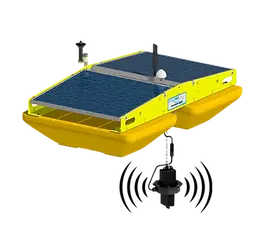
Hydro Synergy deployed the DB Quattro G3 CSR Ultrasonic System, operating through Critical Structural Resonance (CSR).
The system targets gas vesicle resonance within cyanobacteria, reducing buoyancy and preventing surface scum dominance without chemically lysing cells.
This approach initiates what has been described in internal reporting as a sonic-microbial intervention, where ultrasonic disruption works in tandem with natural microbial pathways to process destabilised biomass.
The mechanism includes:
-
Buoyancy interruption
-
Sonic pre-fragmentation (“sonic pre-shredder” effect)
-
Organic debt reduction
-
Continuous low-power operation
By avoiding chemical shock, the system supports gradual microbial digestion rather than sudden mass die-off.
ARCS™
Resonance
Conservative, less visible option
Organic Debt Management & Oxygenation
Under severe bloom conditions, lakes accumulate what internal reporting describes as “organic debt” accumulated biomass that, when decomposing anaerobically, may increase methane generation and oxygen stress.
By destabilising cyanobacteria while maintaining oxygenation levels, Lake Tewa demonstrated:
-
Dissolved Oxygen stabilisation at 9.3 mg/L
-
No oxygen crash following bloom suppression
-
Reduced risk of anaerobic methane-generating conditions
This represents structural biological management rather than surface suppression.
Technology Configuration
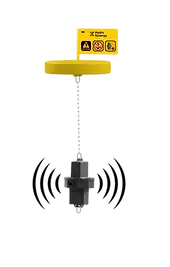
Deployment began 17 April 2025. A primary SolaRaft platform influenced the water column, with a supplementary tether float addressing a localised green algae zone.
Configuration was tailored to lake morphology and seasonal bloom distribution.
Monitoring Framework
Monitoring was conducted through:
-
Watercare Laboratory Services (phytoplankton species & cell counts)
-
Eurofins Laboratory (chlorophyll-a, turbidity, DO, pH, TN, TP)
All outcomes reported are laboratory-verified
Immediate Bloom Collapse
Within six days of deployment, cyanobacteria reduced from 25,027,870 cells/mL to 8,200 cells/mL. By 12 May 2025, levels fell below detection limits.
Surface pH normalised from 9.3 to 7.5 within one week. Ceratium populations reduced by 88.3%, indicating structural impact beyond cyanobacteria alone
Nutrient Decoupling Under Hypertrophic Conditions
Despite persistent Total Nitrogen and Total Phosphorus concentrations, cyanobacteria did not re-establish dominance through December 2025 and into January 2026 summer bloom season.
This condition has been described as trophically buffering high nutrients, where bloom expression is interrupted despite nutrient availability.
Chlorophyll-a reduced from 47.3 mg/L to 5.3 mg/L. Turbidity improved to 1.1 NTU. Dissolved Oxygen stabilised at 9.3 mg/L.
Disruption of Boom-and-Bust Cycling
Historically, Lake Tewa experienced winter echo blooms. In July 2025, green algae biovolume measured 8.4 μm³/mL compared to 82,000,000 μm³/mL in June 2023.
The recurrence cycle did not manifest
Ecosystem Reset & Structural Trophic Shift
Between March 2025 and January 2026, Lake Tewa transitioned from prokaryotic dominance to a eukaryotic-dominant phytoplankton structure.
Increased presence of Cryptophytes and Diatoms (Synedra) signalled recovery of food-web support mechanisms. These species contribute polyunsaturated fatty acids (PUFAs) for zooplankton and fish and promote carbon burial via silica sedimentation.
Internal reporting describes this as movement toward a “Diamond Standard” ecological state, reflecting structural ecosystem reset rather than temporary bloom suppression
Operational & Environmental Relevance
For New Zealand lake managers addressing active cyanobacteria blooms, Lake Tewa demonstrates that ultrasonic intervention can operate under hypertrophic nutrient conditions without chemical introduction, without mechanical disturbance, and without oxygen destabilisation.
Importantly, bloom suppression extended into the subsequent summer bloom season.
Current Status & Seasonal Validation
As of January 2026, Lake Tewa entered peak summer bloom season with zero detectable cyanobacteria under laboratory monitoring.
The system remains operational. Monthly monitoring continues.
Secure Lake Assessment Form is loading. Please wait a moment…Thank you for your patience.